
18 MAY 2026
New MHCLG research: Age Based Housing Needs and Circumstances
The Housing & Finance Institute has had a longstanding interest in exploring the extent to which access to good housing impacts on different age cohorts. For example, the HFI paper "A Time for Good Homes" explored different housing tenures and expectations for each housing group by decade.
So it is interesting to see a recently published analysis paper from MHCLG looking at housing by reference to age profiles with information from the English Housing Survey (EHS).
The research acknowledges that there has been less focus on those aged 35 to 64 and aged 65 and over by reference to specific housing-related challenges and needs, than for younger people.
The research identifies that in each of the cohorts there are specific and different challenges. One aspect highlighted is the challenge for older people on reduced incomes. As well as the impact on illness and isolation: "Around half of those aged 65 or over are living with someone with a long-term illness or disability, increasingly report loneliness since the pandemic and face additional barriers to moving home, such as their home being specifically adapted to their needs."
Those aged between 35 and 64 are identified as having "a need for stability and housing security" due to having children at home. It says "this is more likely achieved with home ownership rather than private renting". However, it's notable that for this group the percentage in private rent has increased over the last decade while the percentage in home ownership has reduced.
By contrast, for younger people, the EHS survey shows a significant increase in the numbers of owner occupiers and a reduction in those in private or social rented homes – there has been a staggering 11% rise in the proportion of younger people in owner occupation over the last decade (the under 35 age group).
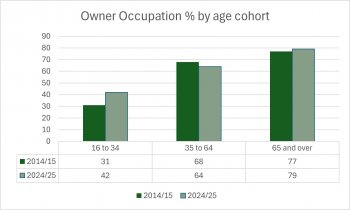
Figure 1: HFI analysis of MHCLG age cohort/tenure EHS data
From this age profile segmentation work, we can see that age is associated with differences in housing challenges – related to affordability, well-being, household type or characteristics – across all age cohorts. The MHCLG research approach is broad - age cohorts are divided into three large age chunks of 16-34, 35-64 and over 65 and so there must be some caution in drawing policy conclusions from such a broad segmentation. That said, greater age profile segmentation may provide a greater understanding of life journey needs – and policy makers could consider more carefully the needs of differing age groups.
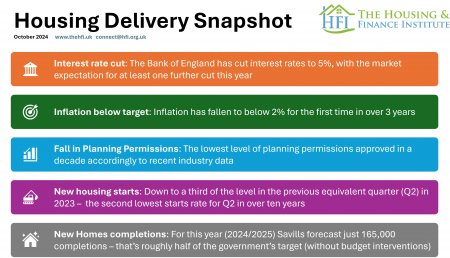
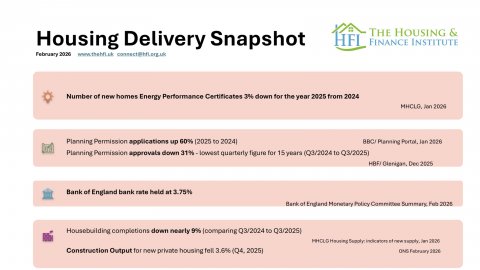
February 2026 Housing Delivery Snapshot
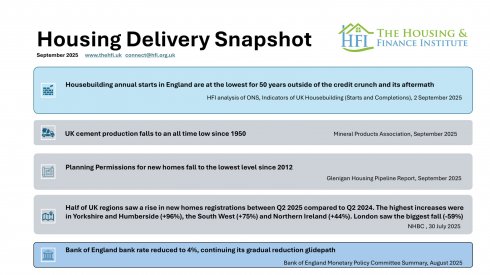
September 2025 Housing Delivery Snapshot
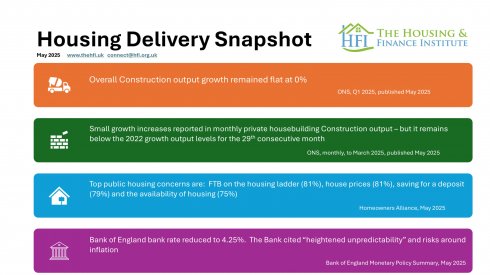
May 2025 Housing Delivery Snapshot
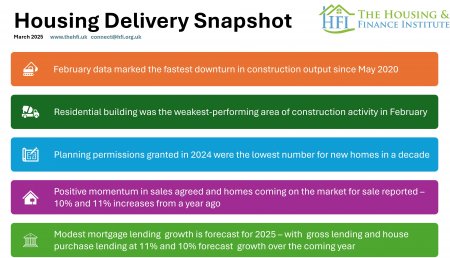
March 2025 Housing Delivery Snapshot
January 2025 Housing Delivery Snapshot

December 2024